Brave Chrome

Chrome is the world’s most popular web browser having a total of 64% browser share in the world. Recently, a new competitor of Chrome has been emerging rapidly- Brave. The Brave browser has shown significant growth in recent times and that’s why this is the right time to take a look at the Brave vs Chrome battle.
- The Brave browser is a fast, private and secure web browser for PC, Mac and mobile. Download now to enjoy a faster ad-free browsing experience that saves data and battery life by blocking tracking software.
- BRAVE Extension is delivered to you as part of a bigger project called DO ONE BRAVE THING (www.onebravething.eu), shortly DOBT. DOBT empowers youth to 1 recognise and challenge online polarising and radicalising propaganda and 2 develop on-/off-line campaigning, counter-narratives and democratic civic engagement to promote EU values.
If you have been wondering if Brave is better than Chrome, or what is the best alternative to Chrome, you are going to find this post interesting. This Brief comparison between Google Chrome and Brave will help you pick your side.
On the desktop: Brave uses the same browser engine as Chrome, meaning it has the same security-holes as Chrome. Chrome is a big target for hackers (being the most popular browser in the world), and a webpage that will hack Chrome may also hack Brave. However, Brave has security features that Chrome doesn't (such as a built-in adblocker). Downside of using Brave. While Brave may be faster and more secure it does come with some drawbacks you need to consider. A lot of criticism in previous articles mentioned the lack of add-ons and extensions but this has now been fixed and all Chrome extensions are now available in Brave. For developers there still isn’t anything to beat Chrome’s dev tools. Brave works with all the same extensions and themes as Chrome. Brave is based on the same open-source Chromium code as a number of other browsers, so your favorite extensions just work with Brave. We don’t host our own extensions store though, so for now the best place to find extensions is the Chrome Web Store.

Contents
- 1 Google Chrome vs Brave: The Battle of Web Browsers
- 2 Is Brave Really Better Than Google Chrome?
Google Chrome vs Brave: The Battle of Web Browsers
Google Chrome is the most popular and used web browser in the world. It is available for all the mainstream platforms like Windows, Mac, Linux, Android, iOS, etc. This cross-platform browser is owned and operated by Google, and was initially launched in 2008. Ever since its launch, it has skyrocketed to success and became the market leader.
On the other hand, Brave is a free and open-source web browser available for the majority of platforms like Windows, Mac, Linux, Android, and iOS. This browser is based on Chromium and is developed by Brave Software Inc. It was launched in late-2019 and instantly rose as a legit competitor to Chrome.
Brave takes a different approach than Chrome about ads and user-privacy. It strips the ads and trackers from the website, shows its own ads, and allows users to donate cryptocurrency to the websites and content creators as Basic Attention Tokens.
General Features and Comparison

We’ll start this battle of the two greatest browsers of the current time by taking a look at their basic specifications and general features. Both Google Chrome and Brave are standard web browsers that you can use to browse the web. You can use them to visit websites, run web apps, and view online content. They both are free to use and remember website authentication information.
Google Chrome is based on the open-source Chromium project, while Brave is based on the Chromium browser. Chrome takes a sandbox-style approach to web security, while Brave takes a unique approach. In recent times, a lot of users are worried about Chrome invading so much into their life that they are searching for good alternatives.
Microsoft Edge is one common and very popular alternative, but a lot of people don’t find it good enough. This paved the way for Brave, which was developed by the firm co-founded by Brendan Eich, who is the creator of JavaScript, and co-founder of Mozilla.
Chrome vs Brave: Who Performs Better?
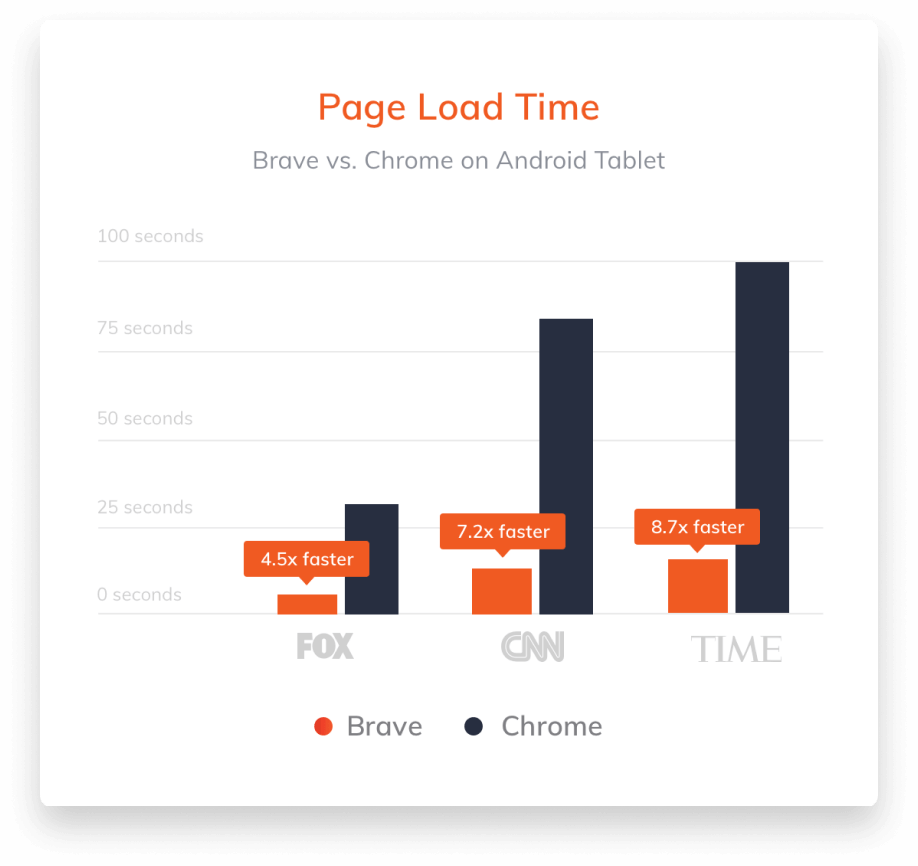
Everyone knows that Google Chrome is a strong go-to browser to load any website or page online. However, the fact that it hogs up a lot of PC’s resources isn’t hidden either. On the other hand, Brave is developed in a manner that it can easily outperform Chrome.
It consumes 33% less memory and hence loads any page faster than Google Chrome. Not only this but it also provides a longer battery life.
Along with this, Brave also protects your privacy and never collects any data While, Chrome is well-known for entering too much into your personal life to serve the ads that “sell.” All of this makes Brave a much better performer than Chrome in the current era.
Chrome vs Brave: Which one is better for your Privacy & Security?
Google Chrome has a terrible reputation when it comes to a person’s privacy and security. It collects too much data to serve more relevant ads and also monitors the way you browse the web, even in the “Incognito Mode.” On the other side, Brave is building its reputation as the savior of your privacy. It automatically blocks all the ads that track you. This not only protects your personal information but also loads the content faster.
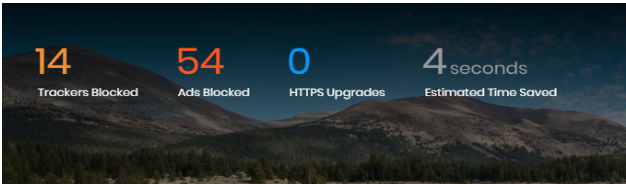
When you browse the web with Chrome, your experience is compromised so that the advertisers, big tech companies, and other parties can earn dollars. Brave saves you from this. You can even check all the blocked stuff during your browsing sessions with Brave to find out how dark the internet actually is.
Chrome vs Brave: Ram Usage Comparison
It was interesting to compare the RAM or Memory Usage of both browsers. We have tested Brave and Chrome to figure out which one is lighter to use on a Windows PC. When idle, both browsers consume a similar amount of RAM but Brave uses a slightly lower amount (297MB for Chrome and 167MB for Brave).
When we load websites, there is a drastic difference between the RAM usage by Chrome and Brave. We loaded a random combination of different types of webpages from various URLs and the results clearly show that Brave uses one-third of the RAM used by Chrome in a similar scenario. Brave offers a 40% to 70% memory reduction than Chrome.
Is Brave Really Better Than Google Chrome?
After going through the long comparisons, this is the question that might be roaming in your mind- if Brave is really better than Chrome? If you ask me, I’d say yes, I find it better and this post has been written while using Brave.
One thing that made me stick to Chrome, and not switch to any other browser was “Chrome Extensions.” But since Brave is based on Chromium, I can add and use the same extensions on it. So, I find Brave better than Chrome because, it is more private, blocks ads automatically, loads websites faster, and provides a swifter browser experience.
However, that doesn’t mean that Chrome is bad. It is one of the best browsers in the world but now Brave has highlighted its shortcomings. It has shown the world that what they lack, and delivered the same.
Should I switch to Brave in 2021?
Yeah, why not. If you don’t want to use Chrome for any reason, be it concerns over privacy or Chrome slowing down your PC, or anything else, then Brave will be the best replacement for Chrome. You can switch to it without any worries. It is an incredibly fast, feature-rich, secure, and smooth web browser.
If you haven’t tried it yet, then you should give it a shot soon. Then, you can decide for yourself if you want to start using Brave more, or want to stick to Chrome like before.
Final Verdict
Brave vs Chrome is one of the hottest debates on the internet right now. We have broken down their comparison into simple yet detailed bits in this post. So, if you were confused about what browser is better than the other, you can make your mind now. Brave is going to be one of the fiercest competitor to Chrome in the coming years.
That’s all for this battle. I hope you find it interesting and helpful. Feel free to use the comment box to pour down your opinions.
Last updated Apr 23, 2021
Remember that time you searched for blenders on your phone, then saw an ad for one while scrolling through YouTube on your laptop right after? It’s no coincidence: Google is deliberately following you. Every site you visit, every password you enter,12 every video you download,3 and every purchase you make can be stored and shared by your browser without your knowledge or consent…so that advertisers, corporations, and other nosy nellies can make billions in annual profits.4 Together with Facebook and Amazon, Google sweeps in over two-thirds of all digital ad dollars by monitoring your online behavior to generate sales.56
The Brave browser is built to protect you from this exploitative surveillance economy. Unlike Google Chrome, which individually identifies and tracks users while they browse, Brave ensures that your data remains private and on your device.78 And whereas Google Chrome hoards your browsing history,910Brave never has and never will save your private information.11 No offense, but we don’t want to know you that well.

Brave never has and never will save your private information.
Protect Your Digital Footprint
Whenever you browse with Chrome, Google and other tech giants are invited to monetize your personal data by following you around as you browse.12 These third parties use trackers: tools that can monitor your location, demographics, purchase history…even the movement of your mouse!13 Trackers are integral to Google’s business model. In fact, the top five most common tracking tools are all Google-owned.14
Brave blocks trackers by default, so that you can browse freely and anonymously. From foiling attempts to record your online activity to preventing the installation of malware on your computer, Brave’s built-in blocking tool, Brave Shields, works overtime to stop online stalkers in their tracks. It not only makes your browser and your browsing activity harder to recognize, it automatically upgrades you to the most secure connection available every time you visit a new website.15
Privacy by default
Cross-site Trackers
- Blocked by default
- A few blocked by default
- No protection
Invasive ads
- Blocked by default
- A few blocked by default
- No protection
Secure connections (HTTPS)
- Blocked by default
- A few blocked by default
- No protection
Malware & Phishing
- Blocked by default
- A few blocked by default
- No protection
| Blocked by default | A few blocked by default | No protection |
|---|---|---|
| Cross-site trackers | ||
| Invasive ads | ||
| Insecure HTTP connections | ||
| Malware & Phishing |
Browsing, Uninterrupted
Using trackers, invasive ads collect your personal information to pressure you into making a purchase.16 Google Chrome allows for autoplay videos, huge banner ads, and other distractions to interfere with your Internet surfing experience.1718 What’s worse, Google can continue to collect your data even if you explicitly ask them not to.1920
Chrome requires you to download apps and manually adjust your settings to stay protected. Brave blocks creepy ads automatically,21 so the responsibility of installing and managing ad blockers doesn’t rest on you. Keep ads hidden or opt-in to view privacy-respecting Brave Ads and earn rewards. Every ad that you’re served in Brave is pre-approved by our team and tracker-free, so you never have to worry about being followed. Your personal information never leaves the Brave browser.
Privacy Made Easy
Right out of the box, Brave offers more privacy protections than any other web browser. But if you want even more robust privacy protections, we’ve got you covered there too. While Google Chrome’s incognito mode offers some additional privacy over its standard mode, it’s anything but private.‘Incognito mode’ doesn’t necessarily hide your browsing activity or your location, meaning that this information can be shared with websites, your Internet provider, and even your employer.222324 It doesn’t even stop third-party trackers from spying on you.
Brave, on the other hand, gives you the option to open a Private Window with Tor, which keeps your location and search history hidden from everyone, including us.25
Brave respects your right to privacy and fights to protect it by blocking the bad actors who stand to profit from stealing and stockpiling your personal information.26
Brave Chromebook
Because what you do online is your business, not ours. Join us in building a safer Internet and Download Brave today.
Brave Chrome Firefox
https://money.cnn.com/2015/11/12/technology/instaagent-instagram/index.html A recent study from Binghamton University also suggests your smartwatch or fitness tracker is not as secure as you think – and it could be used to steal your ATM PIN code. ↩︎
https://www.google.com/chrome/privacy/ A record of what you downloaded from websites. ↩︎
https://gvwire.com/2020/06/23/how-much-is-our-personal-data-worth/ The CCPA aims to protect over $12 billion worth of personal information annually. ↩︎
https://www.cnbc.com/2018/06/04/facebook-reportedly-gave-personal-data-to-60-companies-including-apple-amazon-and-samsung.html Facebook had formed at least 60 data-sharing partnerships with device makers including Apple, Amazon, Microsoft and Samsung over the last 10 years. Without explicit consent, these deals granted device makers access to a Facebook user’s relationship status, political leaning, education history, religion and upcoming events, the Times reported. ↩︎
https://marketingland.com/almost-70-of-digital-ad-spending-going-to-google-facebook-amazon-says-analyst-firm-262565 Google, Facebook and Amazon are the top three digital ad platforms in the U.S. Together they capture just under 70% of all digital ad dollars spent according to eMarketer. More than two-thirds of all digital spending. The three companies are collecting 68.1% of digital ad spending says the firm’s latest estimates. ↩︎
https://www.pcmag.com/how-to/how-to-clear-your-cache-on-any-browser Chrome doesn’t give you the option to not collect your browser history, but earlier this summer, Google announced it would let people request that Google delete Location History and Web & App Activity every three months or every 18 months. ↩︎
https://protonmail.com/blog/best-browser-for-privacy/ However, unlike Chrome, Brave does not collect any data about your online activity. Your data remains private and on your device. ↩︎
https://www.pcmag.com/how-to/how-to-clear-your-cache-on-any-browser Chrome doesn’t give you the option to not collect your browser history, but earlier this summer, Google announced it would let people request that Google delete Location History and Web & App Activity every three months or every 18 months. ↩︎
https://www.theverge.com/2018/10/24/18017832/google-search-privacy-changes-2018 Google stores a record of everything you search for on Google.com if you’re logged into your Google Account. You can clear your local browser history, but that won’t clear what’s stored on Google’s servers. ↩︎
https://www.computerworld.com/article/3292619/the-brave-browser-basics-what-it-does-how-it-differs-from-rivals.html The web browser from Brave Software relies on an unusual business… sworn that it does not, and will not, store any user data on its servers. ↩︎
https://www.eff.org/deeplinks/2020/03/google-says-it-doesnt-sell-your-data-heres-how-company-shares-monetizes-andGoogle monetizes what it observes about people in two major ways: It uses data to build individual profiles with demographics and interests, then lets advertisers target groups of people based on those traits. It shares data with advertisers directly and asks them to bid on individual ads ↩︎
https://www.technologyreview.com/2016/05/18/160139/largest-study-of-online-tracking-proves-google-really-is-watching-us-all/ That’s one lesson from the largest study yet of the technology that tracks people’s movements around the Web. When Princeton researchers logged the use of tracking code on the Internet’s million most popular websites, Google code was found on a majority of them. Google Analytics, a product used to log visitors to websites that integrates with the company’s ad-targeting systems, was found on almost 70 percent of sites. DoubleClick, a dedicated ad-serving system from Google, was found on close to 50 percent of sites. The top five most common tracking tools were all Google-owned.↩︎
https://brave.com/features/ Whenever possible using the HTTPS Everywhere list, Brave automatically upgrades to HTTPS for secure, encrypted communications when an ordinary browser would use an insecure connection. ↩︎
https://www.washingtonpost.com/technology/2019/06/27/help-desk-how-fight-spies-your-chrome-browser/ There is one Chrome setting that privacy advocates disagree on: sending a “Do Not Track” request with your browsing traffic. Once upon a time, this was a good idea — but the industry hasn’t taken action on it, and now some data companies actually use it as one more way to track people. The argument for turning it on: You’re telling sites you specifically do not consent to them tracking you. ↩︎
https://helpdeskgeek.com/how-to/how-to-stop-personalized-ads-and-search-results-in-google-and-facebook/ Unfortunately, there isn’t really a way to stop Google from gathering data on what you search… ↩︎
https://ads-blocker.com/brave/ Brave is currently the only browser that works by default as an ad blocker and helps avoiding annoying commercials, strange followers, ugly banners and skips video commercials on the Internet! How awesome is that? ↩︎
https://support.google.com/chrome/answer/7440301?co=GENIE.Platform%3DAndroid&hl=en Incognito mode stops Chrome from saving your browsing activity to your local history. Your activity, like your location, might still be visible to: Websites you visit, including the ads and resources used on those sites Websites you sign in to Your employer, school, or whoever runs the network you’re using Your internet service provider Search engines Search engines may show search suggestions based on your location or activity in your current Incognito browsing session. ↩︎
https://www.mentalfloss.com/article/541658/why-browsing-incognito-mode-isnt-private-you-think Your internet service provider (ISP) can see your activity. If you’re logged into your company or school’s Wi-Fi, your boss or school administrators can still see what you’re doing on that network. ↩︎
https://nordvpn.com/blog/incognito-mode-not-as-private-as-you-think/ Your private browsing mode only blocks your own device from recording your traffic. You can still be tracked with your IP address (we have a tool that shows you what your IP address reveals about you). Your browsing data can still be collected by your ISP, your employer, and any other third party that can track your IP address. ↩︎
https://www.fastcompany.com/90321235/i-protected-my-privacy-by-ditching-chrome-for-brave-and-so-should-you … forwards your request to its final destination. This makes it virtually impossible for the website you are accessing to know that the request came from your computer. ↩︎
https://cxl.com/blog/online-manipulation-all-the-ways-youre-currently-being-deceived/ As the SEO Doctor pointed out, even Google isn’t always so righteous in their practices. He gave two examples of their (possible) dark pattern of disguising ads. ↩︎